Women’s History Month is a chance to honor the women whose leadership has helped build stronger, more caring, and more just communities. This year’s theme, “Leading the Change: Women Shaping a Sustainable Future,” invites us to think about sustainability in a broad sense across multiple topics. These topics include the environment, financial stability, health sustainability, community resilience, leadership succession, and intergenerational sustainability especially when considering the collective goal of these figures was to inspire a generation of new leaders to carry forward their work.
At the DEC, that vision resonates deeply. A sustainable future is one in which both older adults and family caregivers are supported, community care is valued, health access is uniform, and older adults in every community can age with dignity, safety, and respect. The voices below, drawn from women across countries and generations, reflect the kind of future we should strive to keep building together.
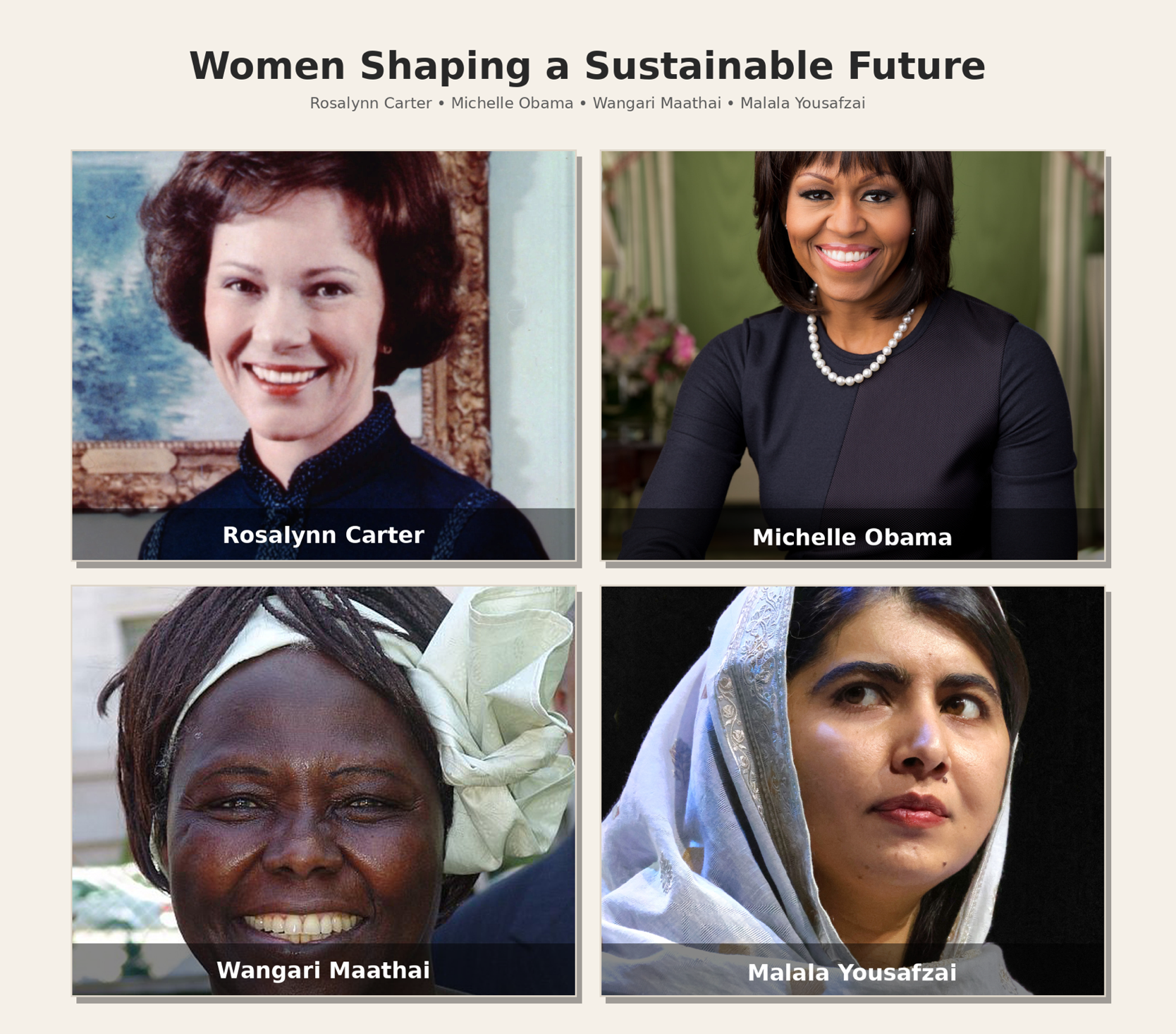
1 Rosalynn Carter, Former First Lady of the United States and leading advocate for family caregivers, mental health, and older adult care
“Do what you can to show you care about others, and you will make our world a better place.”
2. Wangari Maathai, Kenyan environmentalist, founder of the Green Belt Movement and Nobel Peace prize laureate
“They have the energy and creativity to shape a sustainable future”
- Maathai’s word reminds us that sustainability is also about nurturing the next generation and trusting communities to lead change
3. Gro Har Brundtland, former Prime Minister of Norway and global leader on sustainable development and public health
“Sustainable development is development that meets the needs of the present without compromising the ability of future generations to meet their own needs.”
4. Rigoberta Mench Tum, Indigenous Guatemalan human rights activist, and Nobel Peace Prize laureate
“Fight for peace, for justice, for the rights of those who suffer.”
5. Malala Yousafzai, Pakistani education activist and Nobel Peace Prize laureate
“It is not time to pity them. It is time to take action.”
- That urgency matters for caregiving, aging, and community supports too. Real change comes when compassion moves from words into action.
6. Leymah Gbowee, Liberian peace activist and women’s right leader who helped lead a nonviolent movement for peace
“Ordinary mothers are no longer begging for peace, but demanding peace, justice, equality and inclusion in political decision-making.”
7. Ellen Johnson Sirleaf, former President of Liberia and the first women elected head of state in Africa
“History will judge us by the legacy we leave behind for generations to come”
8. Tawakkol Karman, Yemeni Journalist, democracy activist, and Nobel Peace Prize laureate
“Human civilization is the fruit of the effort of both women and men.”
- Sustainable change cannot be built by leaving women voices, labor, or leadership on the sidelines. It takes both men and women
9. Nadia Murad, Yazidi human rights advocate and Nobel Peace Prize laureate
“The only prize in the world that can restore our dignity is justice”
10. Michelle Bachelet, former President of Chile and global advocate for health, human rights, and gender equality
“Just as a healthy society is underpinned by the principles of equality and justice…”
- Health does stand apart from justice. It depends on it, which is exactly why community care and equity matter so much in aging policy.
11. Jane Goodall, British primatologist, conservationist, and global environmental advocate
“What you do make a difference, and you have to decide what kind of difference you want to make.”
12. Eleanor Roosevelt, former first Lady of the United States and champion of human rights
“Where, after all, do universal human rights begin? In small places, close to home.”
13. Phumzile Mlambo-Ngcuka, South African leader and former Executive Direct of UN Women
“No country prospers without the engagement of women.”
- It is a short quote that holds powerful meaning – Communities are stronger when women are fully present in leadership, decision-making, and care systems
14. Michelle Obama, former First Lady of the United States and advocate for health families, community well-being, women’s leadership
“The difference between a broken community and a thriving one is the presence of women who are valued”
15. Sima Bahous, Executive Director of UN Women and advocate
“Because equality with exceptions is not equality.”
Women’s History Month gives us a chance not only to celebrate women’s voices but to listen carefully to what those voices are asking of us: to care more deeply, to act more boldly, and to build communities where justice, dignity, and respect can endure. That is the kind of sustainable future the DEC believes in.