
I moved to Jamaica Plain on May 8, not knowing exactly what to expect.
Leaving New York, I knew I was moving into a neighborhood with a reputation for being progressive, creative, and LGBTQ+-friendly. But there is a difference between knowing something intellectually and feeling it in your body when you arrive somewhere new. Within the first few days, Jamaica Plain did not just introduce itself to me. It welcomed me.
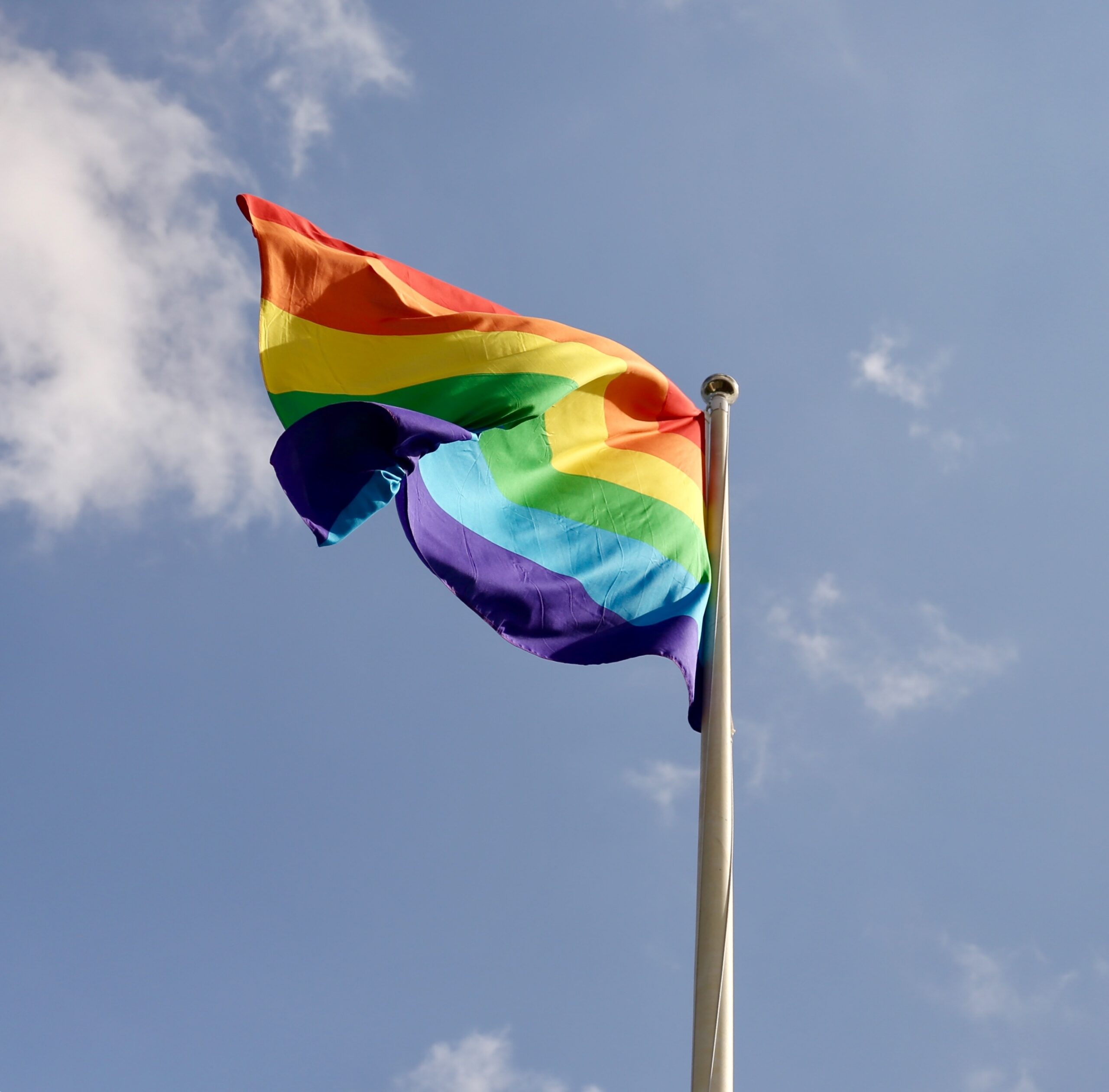
I noticed it almost immediately. Pride flags hanging in windows. Signs in storefronts that made clear that all are welcome. Messages of resistance, care, and community taped to doors and tucked into the daily rhythm of the neighborhood. Even before I had unpacked everything, the streets around me already seemed to be speaking in a language of belonging.
What surprised me most was how quickly that feeling became personal. On my first walks to and from my house, people said hello. A few days later, neighbors on my street recognized that I was new and asked if I had just moved in. They told me to let them know if I ever needed anything. It was simple, but it meant something. In a city, welcome can sometimes feel like a rare bird. Here, it seemed to perch on front steps, sidewalks, and porches.
As I started walking around to get acquainted, especially along Centre Street, I began to see Jamaica Plain as a neighborhood where past and present are constantly in conversation. Centre Street runs like a spine through JP, carrying coffee shops, small businesses, families, students, older adults, artists, longtime residents, and newcomers all at once. It is colorful and busy, but not in a way that feels anonymous. It feels lived in.
The history is visible too. The Ellen Swallow Richards House, once home to the first woman graduate of MIT and a pioneer in public health and sanitation, stands as a reminder that women were pushing boundaries here long before our current language for equality had fully formed. The Loring-Greenough House, one of JP’s oldest surviving structures, still holds the weight of colonial history and community memory. The Eliot School, with its long history of education and craft, took a remarkably forward-looking turn in the 19th century when Ellen and Robert Swallow Richards helped advance manual arts education for both girls and boys.
Walking past these places, I could feel how the neighborhood’s current spirit did not appear out of nowhere. The Pride flags, the welcoming storefronts, the public library, the community spaces, the neighbors who look up and say hello: all of it felt connected to a longer tradition of people challenging narrow ideas about who belongs, who gets to learn, who gets to gather, and who gets to be seen.
By the beginning of June, Pride was no longer something I noticed in passing. It was everywhere.
Flyers for block parties appeared around the neighborhood. People were already celebrating. My street felt more connected by the day. I was invited into a neighborhood group chat where people shared updates about events and developments nearby. Slowly, I began to understand that Jamaica Plain was not simply LGBTQ+-friendly in a decorative sense. Pride here felt woven into the neighborhood’s sense of itself.
That curiosity sent me online to learn more about the place I had just moved into. I found what many people already knew: Jamaica Plain has long been recognized as one of Boston’s most welcoming neighborhoods for LGBTQ+ people, artists, organizers, families, and people looking for a place where they could breathe a little easier. For many, JP has offered something deeper than a place to live. It has offered a way to belong.
After reading more, the neighborhood began to make even more sense to me. The colorful houses, the friendly conversations, the progressive landmarks, the Pride flags, the mix of older and younger residents, the cafés and community spaces: it all felt part of the same story. Jamaica Plain’s openness was not a marketing slogan. It was something people had built, defended, and passed on.
That feeling came into full focus when I attended one of the neighborhood Pride block parties.
It was one of the smaller gatherings, but that made it feel even more intimate. People were laughing, talking, eating, dancing, checking in on each other. There were younger people and older people, longtime residents and newer arrivals, people who seemed to know everyone and people who were still finding their way in. At the event, everyone had pronoun stickers or name tags, a small gesture that carried a much larger message: you get to arrive as yourself here.
That stayed with me.
Seeing older and younger generations celebrate Pride together felt especially powerful. In my work, I often think about what older LGBTQ+ people have endured and what they made possible. Many came of age during times when being openly queer could cost someone their family, housing, job, safety, or health care. They built community because they had to. They created chosen families, gathering places, networks of care, and public visibility in a world that often denied them all of those things.
To stand in Jamaica Plain during Pride Month and see younger people celebrating openly in the same neighborhood where older generations helped carve out space for belonging was moving. It reminded me that Pride is not only celebration. Pride is inheritance. Pride is memory. Pride is the result of people before us insisting that the next generation should not have to hide quite so much.
That is why this neighborhood has already come to mean so much to me.
JP’s queer legacy is still alive in places I am only beginning to know. The Midway Café, just blocks from the South Street corridor, continues to be a home for music, performance, and queer nightlife through Queeraoke. The Brewery Complex, now home to places like Ula Café, reflects another part of JP’s story: old industrial spaces repurposed into community gathering places. These are not just businesses or venues. They are part of the neighborhood’s social architecture. They give people somewhere to meet, organize, laugh, sing, rest, and be known.
And I know I have only scratched the surface.
I have lived here for about two months now, and Jamaica Plain still surprises me. I still do not know every street, every landmark, every story, or every person who helped make this neighborhood what it is. But I know how it has made me feel.
It has made me feel welcomed.
It has made me feel curious.
It has made me feel connected to something older than my arrival and bigger than my own experience.
Most of all, it has made me feel proud.
Proud to live in a place where Pride is visible not only in June, but in the way neighbors greet each other. Proud to live somewhere that honors both history and possibility. Proud to see older and younger generations sharing space, joy, and care. Proud to call Jamaica Plain my new home.
When I left New York, I did not know exactly what I would find here.
In Jamaica Plain, I found a neighborhood that feels like it has been waiting with the porch light on.